Monthly Archives: July 2013

Not in the Mood

tbd177b_fur5b_small_J

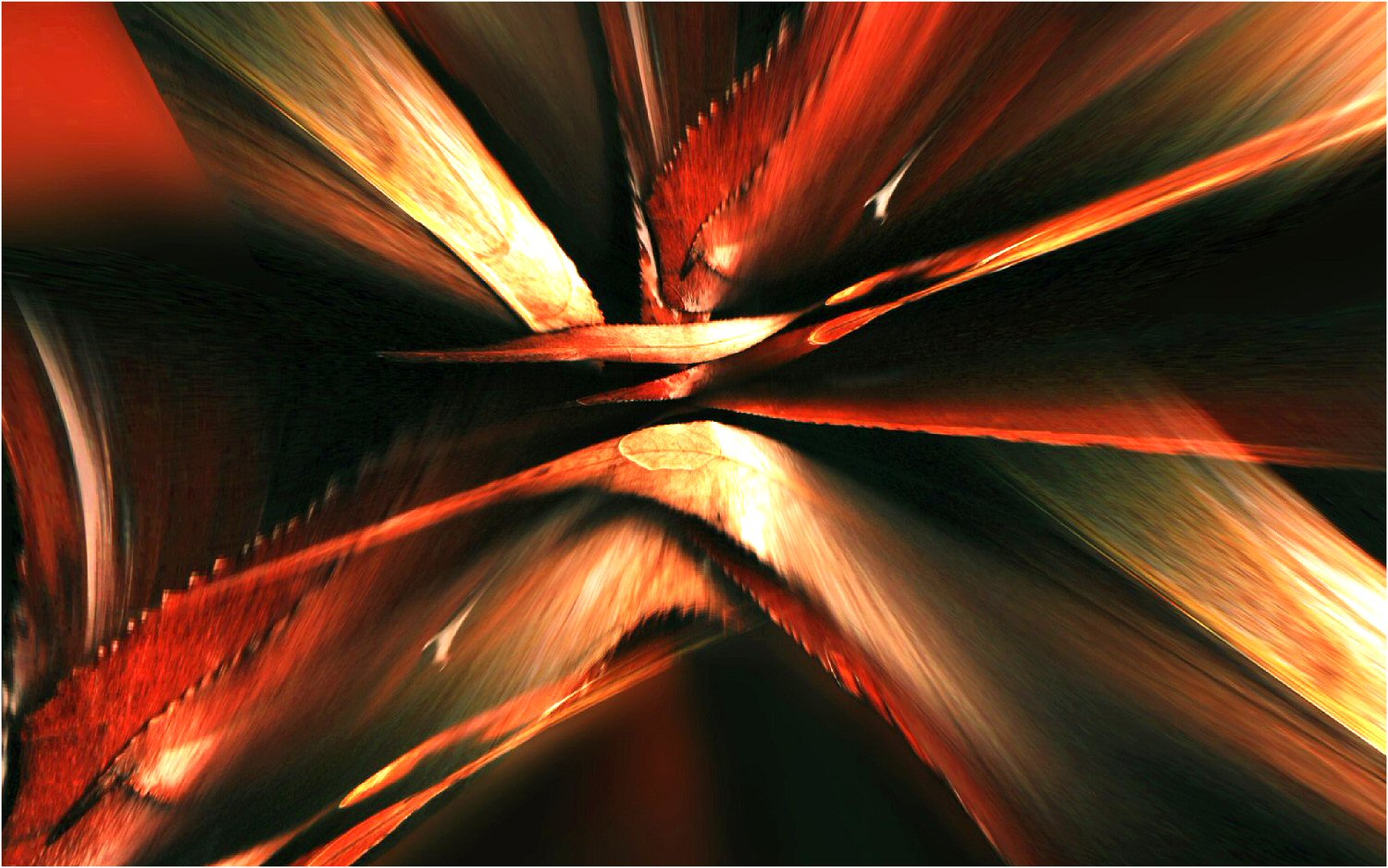
I really haven’t felt like writing much lately, though the art is most enjoyable, such as creating this picture. Oddly enough, it starts with the same image from where “Speechless” came from (Speechless is on my web site).

I think I’ll keep the original image as a secret for now . . . besides, it looks nothing like either of the two pictures mentioned here!

Digital art - work in progress

Abstract Art – A Work in Progress

I took a little break from everything else this week, which means I did a little art . . . haven’t done much for a long time now. It was so much fun, and still is . . . this top picture is where I’ve stopped for now.

I retrieved an old work-in-progress, a picture that I haven’t touched in perhaps three years now – you can see it below.

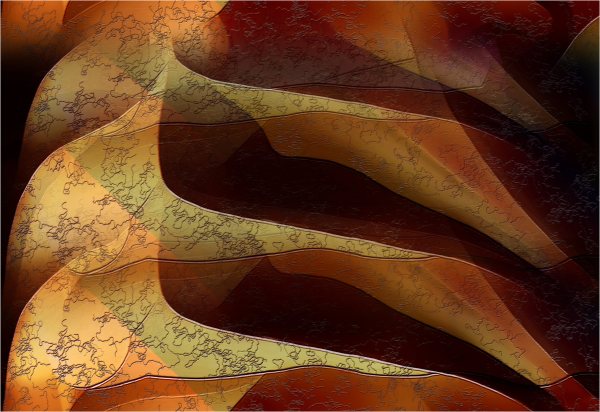
This older picture is from something different I was trying, way back then. There is a tool called a mosaic glass texture effect. You can see what this does in the image below – it makes a picture look like that glass you sometimes see in a doctor’s office, or in a dentist’s chair?

This effect breaks the picture into tiny squares. The picture, Mixed Emotions, was originally one of these tiny squares, from a very different picture. It would have been maybe about 1/8″ square, but I enlarged it and then reshaped  it until it became Mixed Emotions.

digital art example

Mixed Emotions – Original

digital art with Mosaic Glass

Mixed Emotions – With Mosaic Glass Effect

As in life, it seems I do things back asswards, because often I’ll do the painting first, and then go back and add the sketching, just so you can see what I’m doing!

That’s it for now – hope you enjoy the picture. 🙂

A Pinterest Guide to Dawn at Last – Part II

Now for the rest of the story – Dawn at Last . . . and she wants to be in pictures!

This post is a continuation of yesterday’s installment of one Pinterest picture for each of 26 chapters – the first 13 are in A Pinterest Guide to Dawn at Last.

Here’s chapters 14 through 26 . . . as always, I hope you enjoy the show . . . that’s all folks!

Chapter 14 – The Gathering of a Monkey, a Toad, and a Chicken

Chapter 14 - The Gathering of a Monkey, a Toad, and a Chicken

Chapter 15 – The Goddess Awakens?

Chapter 15 - The Goddess Awakens?

Chapter 16 – And So They Dance

Chapter 16 - And So They Dance  Pilar - Shadow Dancing

Chapter 17 – Pushing Buttons . . . and Talking it Over

Chapter 17 - Pushing Buttons . . . and Talking it Over  Said Alice.

Chapter 18 – On to the Frying Pan

Chapter 18 - On to the Frying Pan

Chapter 19 – A Late Lunch of Cognac and Pastrami

Chapter 19 - Today, Instead of Robin, I have Cognac and Pastrami

Chapter 20 – Look Out . . . Wet Flooring!

Chapter 20 - Look Out . . . Wet Flooring! -     "Some things only women can do" - Jackass - hahahah

Chapter 21 – 317 Browning Road . . . Revisited

Chapter 21 - 317 Browning Road . . . Revisited

Chapter 22 – The Painting

Chapter 22 - The Painting -  “Do not look for a sanctuary in anyone except yourself.”  Siddhartha Gautama

Chapter 23 – The Musketeers Get Defensive

Chapter 23 - The Musketeers Get Defensive

Chapter 24 – We Can Still Dance

Chapter 24 - We Can Still Dance

Chapter 25 – Sunni’s Happy Daze

Chapter 25 - Sunni's Happy Daze

Chapter 26 – Getting the Giggles

Chapter 26 - Getting the Giggles

There you have, and I’d love to hear your comments – have any favorites?

A Pinterest Guide to Dawn at Last

Now after posting a ton of text in my last few posts, it’s time for some pictures!

These are all from one of my boards on Pinterest. It’s a fun board, one where every pin is tagged with one of the chapters in Dawn at Last, but don’t worry, there are no spoilers in the picture, but there are some mysterious clues!

If you like this, you would be doing me a huge favor by using the StumbeUpon button at the bottom – it really does help – thank you!

These pictures are from chapters 1 through 13 (the first half of the book). The second half will come later – enjoy! 🙂

Chapter 1 – The Ending Begins

Chapter 1 - The Ending Begins

Chapter 2 – It’s Sunni and They’re Both Wet!

Chapter 2 - It's Sunni . . . and They're Both Wet - twitch- we all find our rivals by nebezial.deviantart.com on @deviantART

Chapter 3 – Squishing a Grape

Chapter 3 - Squishing a Grape

Chapter 4 – A Shocking Surprise

Chapter 4 - A Shocking Surprise

Chapter 5 – Seeing Double . . . Again

Chapter 5 - Seeing Double . . . Again  Lights,Camera,Action! by Slawa.deviantart.com on @deviantART

Chapter 6 – The Best Laid Plans

Chapter 6 - The Best Laid Plans - re-pinned from Shonni Hassoldt

Chapter 7 – Tossing One’s Truffles Away

Chapter 7 - Tossing One's Truffles Away

Chapter 8 – Exchanging Secrets

Chapter 8 - Exchanging Secrets  Repinned from @Clara :) Llanes

Chapter 9 – Trying to Plan a Destiny

Chapter 9 - Trying to Plan a Destiny

Chapter 10 – It’s a Date?

Chapter 10 - It's a Date?

Chapter 11 – Hot Topics on a Cool Night

Chapter 11 - Hot Topics on a Cool Night -    Nature's Canvas

Chapter 12 – It’s Not the Tips

Chapter 12 - It's Not the Tips

Chapter 13 – Fully Applying the Principles

Chapter 13 - Fully Applying the Principles  04122012 by simplemanips.deviantart.com on @deviantART

And there you have it, hope you enjoyed it, and if so please don’t forget to share! 🙂

Going Where No Reader Cares to Go . . . in Cyberspace

This is a follow-up to my previous post, Reading, The Environment, though you don’t necessarily have to read it to understand this one.

A lot of what I wrote in that post is verified in a way by the following four articles I’ve found on this whole issue of ebooks, book publishing, reading and independent authorship.

Forbes Magazine – Excellent Article on Indie Books

The Verge – Ebook Self-Publishing

Publishers Weekly – Best Selling Ebooks of 2012

Huff Post (Canada Books) – Smashwords Owner’s Predictions for 2013

The pros and cons of self-publishing are really well described in these articles above. That need for filtering comes up time and again – essentially my list of Top 10 is my own attempt to do just that – here’s what I did.

Methodology

First, I picked a popular category, such as “Literature & Fiction> Romance”. From there, I went where no man dares to go – below the Top 100 – into the depths – as deep as 1,500 titles under the See! I’d have searched further down, would have liked to see what #28,043 looked like, but I couldn’t. The system wouldn’t let me get past 1,500 which means that if there is a book I want to look at down there, I need to use the search function, so I’d need to know the name of it, or author or ISBN.

Selection Process

To begin, the main sort I use in any given category is “New & Popular”. Basically, when I go deeper I’m looking for less popular, yet good reads – kind of like panning for gold.

My selections are close to random. I ignore popular authors that are down the list, dead or alive, and there are a ton down there – people like Charles Dickens, Herman Hesse, Hemingway and many, many more. There also plenty of living writers down there, but with their older titles. This is kind of odd though, given that the sort is “New & Popular” – huh?

I also found one sub-genre kind of amusing. Did you know that on one site, if you look under “Literature & Fiction” you can find a sub-category called “Literary Fiction” – too funny!

For any given category I pick out around fifty books to look at. I don’t look at price, try to ignore covers and titles, but what I do look at is page counts. On the lower end, I don’t include any under 200 pages – to me that’s close to a novella. Almost all the titles are around 250 – 300 pages, and a few are closer to 400. I’ve also kept away from books that are part of a series, unless it’s the first book.

Looking Inside and Then Some

Once I’ve gotten this list together, I start previewing more than reviewing. This is really a two-step process, and one that typically results in about 80% being discarded. With the remaining 20% I go back and take a closer look, and from there the list gets whittled down to titles that I’d definitely consider buying based on what I’d read.

This is not the same as doing a book review, nor was it ever intended to be. There are a few real benefits as an indie author in doing this kind of exercise, at least for me. I’m fairly well read, really eclectic interests, and I don’t need to read a ton of classics to know whether my book is worth reading, or is “marketable”. After all, if the classics are the benchmark, there are tons of successful, well-written books that fail that test.

Final Selection Criteria

First is the “flow” test. Call it style if you will. If something is written this century or the last, I really don’t want to have to work at reading every second or third sentence. I’m pretty sure everyone reading this understands what I mean. By the way, if you are thinking grammar should be first, that stuff’s gone with the 80% – I’m past that stage.

The next thing is the boredom factor – Have I read this before in one form or another? I realize there may be all kinds of plot turns and twists down the road, but one does get a feel for this. Often it’s uninteresting characters or overly long, drawn out setting descriptions, or perhaps a tinge of melodrama, that makes something boring. It’s almost like many writers are simply trying too hard to grab your attention, and it has the opposite effect.

Third, there is the novelty aspect – it’s pretty easy to tell when a story is just going to get better – kind of like it’s worth buying just to see what actually does happen. I really avoid copycats. As an aside, I’m guessing that in some genres, a solid 10% or more are basically fifty shade knock-offs, and I haven’t even looked in any “erotica” categories . . . yet!

Results

After all of that I had a list of 10 books that I’d say are worth reading as they are published. While I didn’t keep track of the ones that were “close”, I’d say there was about another ten – these are the ones who simply need a little editorial polishing – as stated in those articles at the top, there is a big demand and need for those editorial services.

As it turns out, I have a bit of egg on my face with my Top 10 list, but at the same time I also had one of those “ah ha” moments. The embarrassment came when I did one more final check for independence. I discovered that 7 of the 10 books I chose were actually published by a major publisher, in print first, so the authors are not indies. That means that in the end, after going through over 150 titles, I found 3 that I’d say are really good indie books, on par with the standard set by traditional publishers.

The “ah ha” aspect is that this kind of validated my process, and my skills, at picking out talent. By accidentally mixing indie authors with traditionally published ones, I inadvertently validated the results!

Conclusions

Realizing this is still a very crude process, based on the 3 of 150 titles I found, that means that perhaps 2% of indie titles really have market potential. What does 2% mean though? Well, first, how many indie titles are actually out there? Smashwords is definitely a major player in launching new indie works. They’re putting out almost 100,000 a year now, and cumulatively they are at about 250,000. Then there are other similar services, as well as number of indies who simply publish directly, with no intermediary.

It’s not easy to get a handle on that number. I’m sure there is a strange exaggeration out there about the total books available – the highest number I’ve come across is something 4,000,000 – I don’t think so!

My best estimate, and I think this may be on the high side, is perhaps there are 500,000 ebooks available, fiction only and by indies, and novels (say 70,000 + words). On the low side, using that criteria, it may be as low as 300,000. If my 2% estimate is in the ball park, that means that there are about 6,000 to 10,000 indie works out there with serious market potential – that’s where issues like discovery come into play.

To put that into perspective, as I found in one of those 4 articles mentioned at the top, the traditional publishers claimed that they had 1,000 titles that sold 25,000 or more copies in ebook format in 2012.

I’ll leave you to draw your own conclusions on that . . . this post is getting very long as it is. However, aside from the numbers, I’d also say that it seems like the overall quality of writing that many readers’ find acceptable has certainly gone down. I’m saying that because I looked at a couple of current bestsellers by indie authors and I know that neither of them would have made the first cut in my selection process – that makes the market somewhat unpredictable, certainly from the traditional point of view.

Finally, through all of this, one huge intangible benefit is the confidence I’ve gained about SUNNI KNOWS. I’ll put my book up against any indie standard, or one for published works, so for me it really is an issue of discovery.

If you’re a non-Kindle user, you can order my book on Kobo . . . then you can read it on your favorite e-reading device . . . have a great weekend!
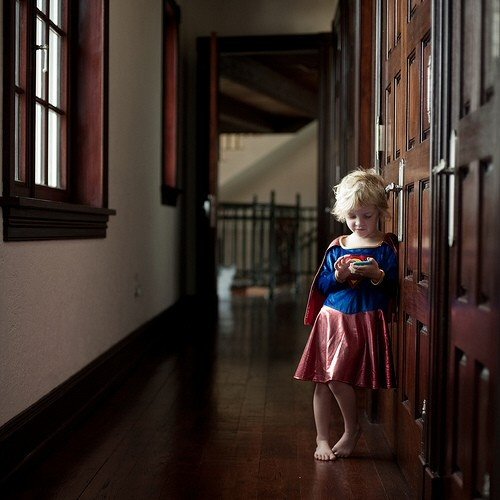
little supergirl

Reading, the Environment

In my last blog I mentioned doing an assessment of the book environment – to call it an industry is a bit of a misnomer.

One of the challenges in strategic planning is defining an industry. In the 1960’s a guy named Ted Levitt wrote an article called “The Marketing Myopia”. It is now considered a classic in The Harvard Business Review. His article is what led to a bit of a paradigm shift – arguably, it is was instrumental in launching branding as we know it today – it definitely changed strategic marketing.

The key point he made is that a product shouldn’t be thought of as something physical, or just thought of as a set features. Depending on the product, these features are important, but in terms of understanding one’s competition (and one’s customers), you need to look at the intangibles – what are the benefits your customers are looking to have fulfilled? For a long time, identifying needs and benefits was how new product opportunities arose. However, that’s not as simple as it may sound.

To put that in the context of books, we’re really talking about the joys of reading. Think of it then as a form of entertainment –  and perhaps even broader in the context of leisure activities – in this context I’m really talking about fiction.

Without doing a formal numerical analysis, here’s what I see, and if I’m wrong, show me the numbers – just make sure they are accurate and valid. There’s a ton of questionable infographic material out there – very little background provided on how the information was obtained, sampling and so on – that kind of stuff really does matter!

How I See It

People are getting fed up with television as a source of entertainment (and information such as news) I’m sure sports is a constant – have you noticed how similar news coverage is to sports coverage? In the good old days a lot of television viewing was habitual, not so much any more. Younger people are becoming more selective, even though they can be very loyal to something they like. The content and credibility of the medium is not improving, and all the networks seem somewhat desperate. That may be partly do a faster, more instant society, where loyalties can be strong for a long time, then turn off in an instant.

Hollywood seems to be in the same boat as television, except perhaps for some genres. Although a lot of people still go to the movies, for many it is for something to do than for the film. More times than not, when I talk to people about this, about what they say, there is usually a tone of disappointment. Hollywood used to provide an element of escapism, but it seems that magic has gone . . . many people are rediscovering that magic through reading for enjoyment, whether that’s romance, YA, erotica, mysteries and so on. Perhaps what is saving Hollywood is that going to the movies is more of a social activity, while reading is done in isolation.

Social media has cut into television time, especially with younger people, but there seems to be a decline in that as well – the novelty is certainly over. The truth is that the term social is really misleading because no matter what the technology, it’s not the same as being there. In many ways it’s closer to a personal experience than a social one.

Reading offers a form of escape from so many stresses in the real world. This may be the age of information, but it is also a very unhealthy age of confusion – and that phenomenon is very strategic – that’s a topic all on its own.

A Little About Ebooks

I’m not sure that the e-book technology has increased the total time spent reading, even though it has changed the way people can find books, and created a certain amount of impulse buying. If there is a net increase in reading, then I’m sure it has more to do with the above shifts than ebook technology. The one caveat may be the impact of price – the lower prices certainly help increase the volume – maybe even having something to do with some people re-discovering the joy of reading. However, there comes a saturation point – there are limits to how much time a person will spend reading.

That issue of time is a big one, and part of that time concerns finding new books to read, and I do mean new, and not the discovery of older, and excellent, books. I’m not saying that every book published in paper is worth reading, but overall there is a pretty good standard that is lacking in the self-publishing craze. I would go so far to say that the supply far exceeds the demand.

That comment isn’t made because of the sheer volume – there is so much self-published work out there that I wouldn’t read even if it’s free. I’m doing some formal research now, and I can safely say that in my findings, and this is just based on my personal reading opinion, at least 80% of what I’ve researched isn’t worth a second look. While that may be based on my opinion, I can pretty much guarantee that most traditional publishers would say that number is low.

Out of the remaining 20%, about half of that has some serious potential with some editorial help and a little re-working – that’s a lot of books! It’s almost painful to read some of this material, in the sense that I’m sitting here thinking, “Oh, you are so close to making this a good read!”

Where Am I Going With All of This?

This is far from a formal research report, but then I have no intent of publishing everything on this blog – each paragraph above could easily be a chapter in a book. Having said that, it will soon be time to move on to another platform, and I will no longer be giving away all my work . . . my expertise . . . I can’t afford to do that. I know it has value, and at the very least I will be asking for donations for some of it.

My next post will talk about the specifics of where I’m going with this – it will include a list of ten hard-to-find ebooks (fiction) that to me are worth a second look, perhaps even a few hidden gems – it only took 25 hours of searching and researching . . . over 150 titles examined . . . none of which are from known authors. Hopefully you can see that I can’t provide that kind of service for free. Actually, I could if this was simply a hobby or if I was rich, but neither is the case.

Having said that, there is a big need to be filled, for readers and indie authors as well, and believe me, from a business point-of-view, the last thing the print part of the industry wants is for readers to easily find those gems, at least not before they do! That does not mean that I see traditional publishers as the enemy of self-publishers; it is more that self-publishing is a potentially huge threat to upsetting the Apple cart.

A Final Note on Paper

Finally, I’m like a great number of people that still prefer a printed book for reading. By the way, I used to work with the big printers, the ones that print major magazines and newspapers. That’s when I was busy doing press checks, printing catalogs on the big machines – 30,000 sheets an hour, 32 pages to a sheet – I wasn’t thinking of the environment that matters most – the trees – paper is the biggest input cost. By the time I left that career behind, paper recycling was an issue, but the bigger environmental issue was with the inks. I guess I just assumed re-forestation was balancing things out. Apparently it’s not, nor is it covered in the sports . . . ooops, I mean the news.

Here is what I mean by the bigger issue:

Global Forestation and Deforestation

PS – I just came upon a memory from my McGill days, when I was studying strategic planning as one of two majors. Myself and a few classmates were having drinks with some of our profs one day. One of these was my accounting prof. This is back in 1984, when the personal computer was just coming out. Accounting went hand-in-hand with computing, and the MIS guy was talking about the concept of a paperless office. I remember how odd it was – the discussion with the accounting guy – turns out he was very shrewd. He was telling us about how he had invested in a paper brokerage firm, how he saw a big future in that because of computers!

PPS – In case you missed it the first time, that darling Supergirl up top is surrounded by trees!

abstract image of leaves

Just me and my Leaves

This has been the slowest week since the last one, and boy has it gone fast!

If you came here thinking today’s blog would be about you, think again – this one’s on me – or was that the last one? What can I say? I’m a writer. Hemingway said we’re all liars, but then can you really believe him?

The week in Review (or is it Next Week’s Preview?)

Actually I’ve got a lot done this week, but almost entirely in my head, and a little on index cards . . . why do they call them that anyway? I mean, does anyone in their right mind actually index them? Why not call them what they are . . . illusions of being organized . . . I’m smart though, I put little page numbers on them in the top right corner, and even circle them. I’ve got about 50 of these cards all over the place. I think about 12 of them have a single vertical line inside a moon, in the top corner . . . wonder what that’s all about!

Actually, I’m in the process of writing about five separate blogs, all very related to each other, and way too much for one blog. My intent was to have the first one written last night and posted today . . . this is not that one.

They are all related to three main subjects:

1. Building an author’s platform – It sure would have been easier if this were the 70’s . . . then I could just go out and buy the shoes, click my heels, and all would be well. Time after time I’m reading about the importance of just being oneself, and doing that basically all over the place. That’s fine, but it sure would help if that Wizard could whip me up a storm of “online oneness” – I’m sure he’s got the brains, not sure about the heart, and as for bravery, hmmm?

It takes a certain amount (a lot) of constraint to avoid flogging one’s own creative output, especially when it’s your main source of income and not something done on the side, but that’s an issue all on its own. As well, what I do keeps me occupied for probably 60 hours a week, maybe more, so it could never be a sideline.

2. The Book Environment – I’m using the term environment rather than industry. Actually, more and more, it feels like one of my projects is doing a case study on the whole mess – oops, environment – it is the best of times and worstest of days – catch my drift?

As you can imagine, this is a huge undertaking, especially for one person, and it is only one of many projects. It’s an important one though. It’s tempting to say that every indie author should try the same, but I’m not sure about that. To begin with, this is where I actually use my MBA skills, not just in marketing, but mostly in strategic planning, part of which includes doing an industry analysis.

I have already identified the big problems, and opportunities, and collapse them in a sentence or two. That only took three months, not full-time of course. However, that isn’t enough – I need to flesh in more details – then focus more on “what’s next” in this crazy world of platform building, selling books and art and so on.

When I’m done, I’ll be posting my insights on here . . . you can be rest assured that it won’t be the same stuff you find elsewhere . . . and you will learn something valuable, whether you’re a writer or a reader, or both.

4. Technical issues – Should I switch from a hosted blog to self-hosted one? Should I shut down my art site for now, or roll it into a redesigned blog? Technically, I can’t fully integrate this blog into my website . . . that would be ideal. Then there are all the design enhancements that I need to make . . . this is the more mundane topic, so I’ll leave it for now.

Now For the Rest of The Story

I found this link in a discussion group on goodreads. Whether you’re a writer or someone who sometimes wonders about writers, you need wonder no more . . . instead, feel free to laugh your ass off . . . some of you may want to pee before following this link:

The Secret Life of Writers

PS – I found these secrets from another writer – you can find her here: Dianne Harman